Freudenstadt
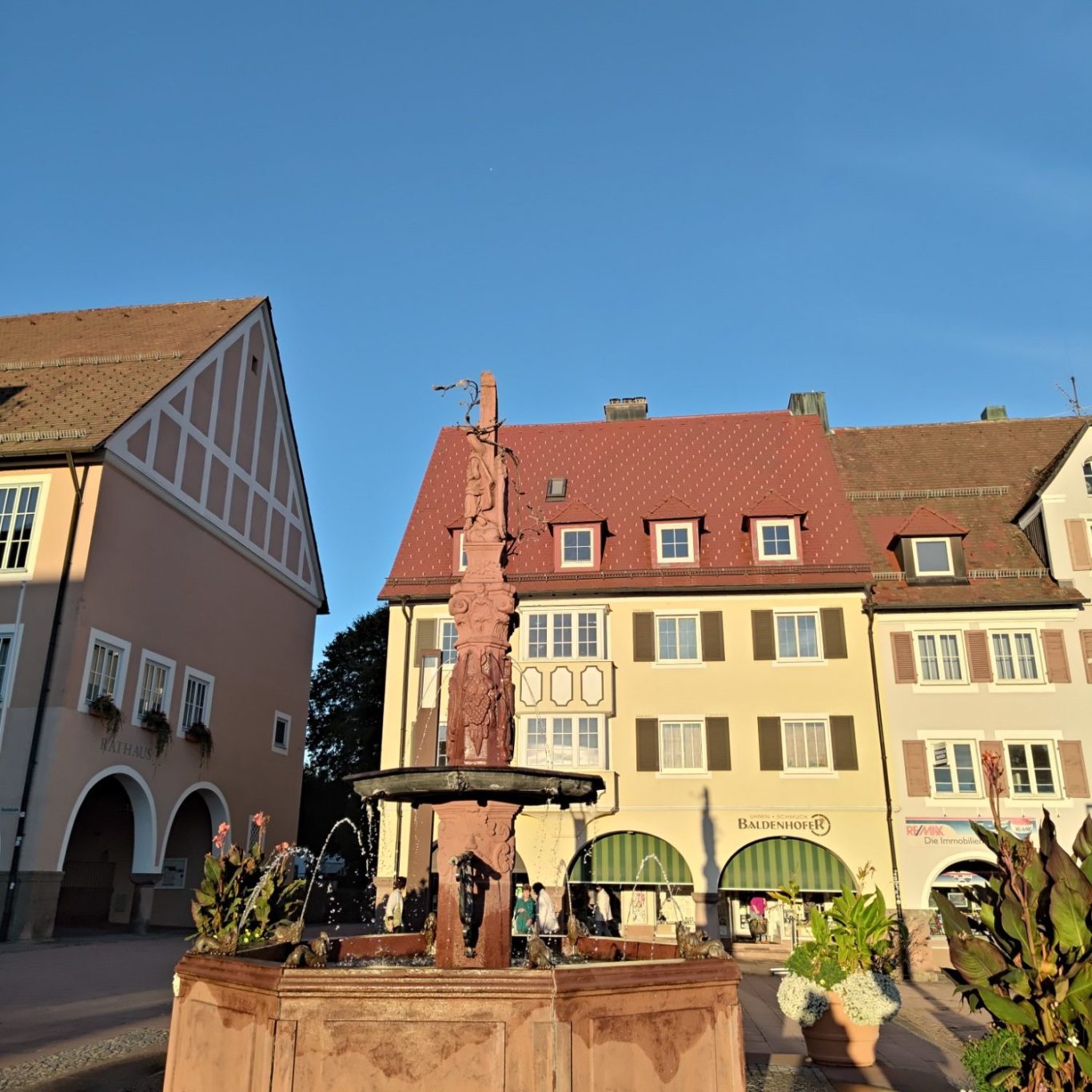
This popular holiday destination is located in the heart of the Northern Black Forest. Freudenstadt is famous for having the largest market square in Germany, complete with its arcades and the 50 buildings that surround it. The beautiful town, which comprises six districts, has a great deal to offer both residents and visitors. Freudenstadt is particularly well-known for its expansive market square—the largest in Germany—featuring arcades and 50 water fountains that provide endless fun for younger visitors during the summer months. With over 100 fountains throughout the town center and its various districts, a sculpture trail, museums, and a diverse cultural program, Freudenstadt is an engaging place well worth experiencing. We also take pride in Germany’s highest-altitude rose trail, located on the Kienberg hill. Meanwhile, the "Panorama-Bad" (panoramic swimming pool and spa complex) offers fun and wellness for the entire family.
Freudenstadt was founded in 1599 by Duke Friedrich I of Württemberg as his summer residential town and is home to the largest market square in Germany.
Key Milestones in the Town’s History
1599–1601: Duke Friedrich I commissions the master builder Heinrich Schickhardt to design a planned town (based on the layout of Albrecht Dürer’s "mill game" board). The moated castle originally planned for the center is never built, due to a lack of funds and the Duke’s death in 1608.
1632 & The Thirty Years’ War: A devastating town fire and population losses caused by the war set the young mountain town back significantly.
From the late 19th century: Through its development into a high-altitude health resort and tourist destination, Freudenstadt evolves from a poor, small town into a sought-after spa town.
1945 (Second World War): On April 16 and 17, 1945, the town center is approximately 95 percent destroyed by French artillery fire.
1949–1954 (The "Miracle of Freudenstadt"): The rapid and unified reconstruction of the town—based on plans by architects Ludwig Schweizer and Heinz Müritz—is completed in 1954 with the inauguration of the new town hall.